Concrete walks, slabs and drives in Mobile
Brick Repair and Renovations does concrete work around houses in Mobile, Alabama: walks, driveways, patio slabs and concrete steps, poured new or replacing cracked and sunken sections. The owner is Donald W Carpenter. In one of the rainiest cities in the country, the slope that sends rain away from the house matters most. Send a photo to (251) 305-5966.
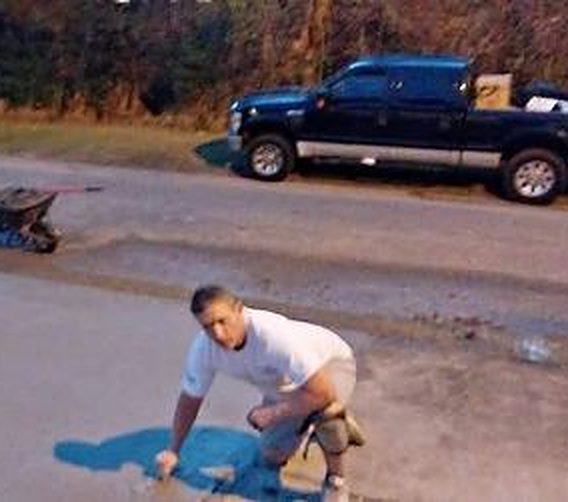
Rain decides how a slab is built
Mobile is one of the rainiest cities in the country, and a lot of that rain comes down hard in a short time. Every walk, patio and driveway around a house has to send that water somewhere. A walk that dips toward the foundation, a patio that holds a puddle against the back wall, a driveway that runs water into the garage: that is where most concrete trouble around a Mobile house starts.
So the first thing set on a new slab is the slope. It is slight, hard to see when you stand on it, and it runs away from the house toward the yard, a drain or the street.
The ground under it
Concrete sits on whatever is under it, and around Mobile that is often clay that swells when wet and shrinks when dry, or sand that washes out from under an edge after enough storms. A slab poured over soft fill, old roots or topsoil settles unevenly and cracks.
Good prep means digging out the soft material, putting down a base and packing it firm, and setting steel or wire in the slab where it needs it.
Live oaks and sidewalks
Anyone who has walked an older Mobile street has seen what live oak roots do to a sidewalk. A root grows under a panel, lifts one edge, and leaves a lip that catches your toe. Near a house the same roots can heave a driveway or crack a patio.
No slab is strong enough to stop a big oak root. What helps is keeping new concrete back from the trunk where you can, and breaking long walks into panels so a lift happens at a joint instead of across the middle. Before cutting roots on a tree you want to keep, call an arborist.
Cracks worth a closer look
All concrete cracks some. The joints cut or tooled into a slab give it a place to crack in a straight line instead of wandering across the surface. A hairline crack in a slab that is still flat is usually only cosmetic.
The cracks that matter usually mean the ground underneath has moved. That section comes out and is poured again on a firmer base. These are the ones to watch for.
- A lip where one side has dropped or lifted
- A panel that rocks or sounds hollow when you step on it
- A slab tipped back toward the house
- Water still standing on the surface a day after rain
- Soil washing out from under an edge
Pouring in the heat
Most of the year it is hot and humid here. Summer sun dries the top of fresh concrete faster than the inside, and that can leave a weak surface that dusts and shows fine cracks. Keeping new concrete damp and shaded while it cures lets it gain its strength. Afternoon storms are the other worry. Hard rain on concrete that has not set can pit the finish, which is why pour day depends on the forecast.
Where concrete meets brick
On most Mobile houses, concrete and brick touch somewhere. A patio poured up against the brick ledge of a slab house. A walk that runs to brick steps. A porch slab with brick on its sides. Where they meet, the concrete should fall away from the house and stay below the weep holes in the bottom course of brick, since those small openings are how water behind the brick gets out. A patio poured up over the weep holes traps that water in the wall.
Driveways at the street
A new driveway or a replaced apron at the street usually touches the city right of way. Ask the City of Mobile what that needs before the old concrete comes out. If you are outside the city limits, ask Mobile County.
Photos that help
Text Donald one photo from far back so he can see how the ground falls, a few closer ones of the cracks or low spots, and a note on what you want: new concrete, a section replaced or a set of steps. Call or text (251) 305-5966. He is based in Mobile.
Questions.
What kinds of concrete work does Donald do?
Walks, driveways, patio slabs and concrete steps around houses in Mobile, poured new or replacing sections that have cracked and sunk.
Why does my patio hold water against the house?
It was poured flat or it has settled back toward the house. The usual fix is taking out that section and pouring it again with the slope running away from the wall.
Can a cracked sidewalk panel be patched?
A hairline crack in a flat slab can be left alone or sealed. A panel that has lifted or dropped usually has to come out and be poured again, since a patch on moving ground does not stay put.
Should I cut the oak roots under my walk?
Ask an arborist first. Cutting big roots near a live oak can hurt the tree, and a struggling tree close to a house is its own problem.
Do I need a permit for a new driveway?
Work at the street and the curb often does. Ask the City of Mobile, or Mobile County if you are outside the city.
Keep reading.
Masonry repair
Masonry repair and maintenance in Mobile, Alabama: brick, mortar joints, chimneys and brick or block foundations.
Foundation repair
Masonry foundation repair in Mobile, Alabama: cracked block, loose brick and washed out mortar in brick and block foundations.
Rain, humidity and brick
How Mobile's heavy rain and damp air get into brick walls through joints, weep holes, gutters and splashback, and which fixes to make first.
Oak roots, clay and cracks
How live oak roots, wet clay and sand move the ground under Mobile houses, which brick cracks are cosmetic, how to mark them, and when to call an engineer.
Brick repair
Spalled, cracked, loose and missing brick repaired in Mobile, Alabama by Donald W Carpenter, matched as close as he can.
Send the details and Donald will call.
Tell Donald what you are seeing at the house and he will get back to you to set up a look.
Show Donald where the water sits.
Send one photo from far back and one up close.