Old brick, lime mortar and why the joint should give first
Old brick in Mobile's older neighborhoods is softer than modern brick and was laid in lime mortar. The mortar has to stay softer than the brick and let water out, so the joints wear instead of the brick. Repointing old brick with hard cement mortar cracks and crumbles the brick around it. Match the old mortar in color, texture and joint shape, and ask the City of Mobile about historic district review first.
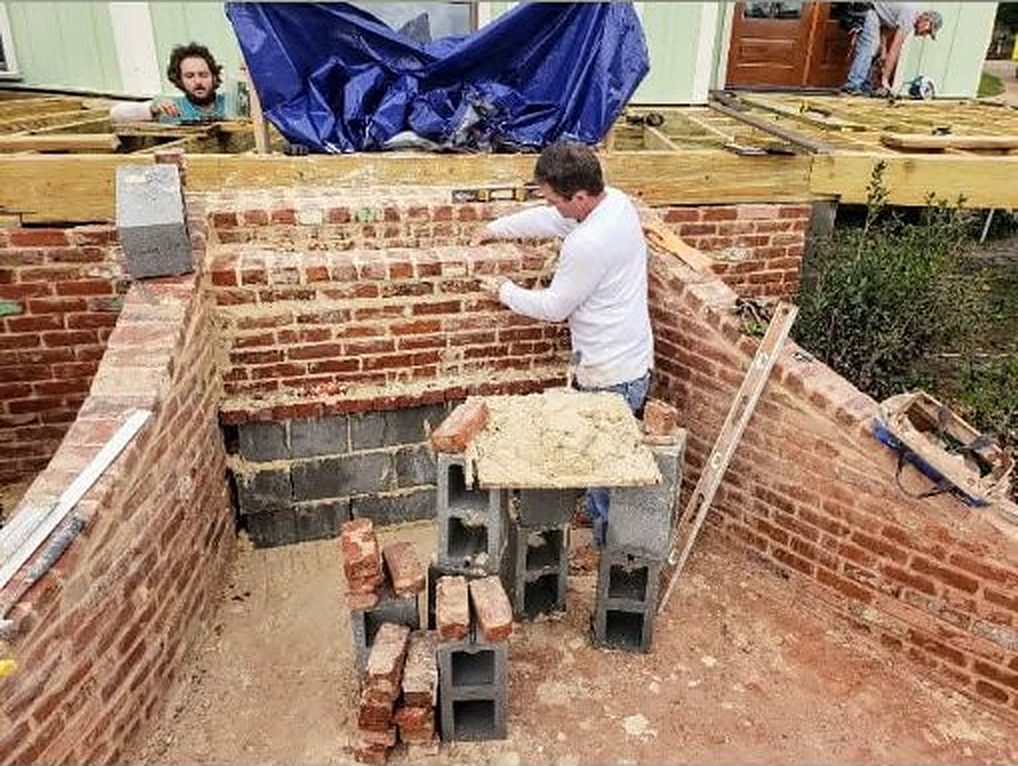
The brick in Mobile's older neighborhoods
Downtown, Oakleigh, Old Dauphin Way, Church Street East, the De Tonti Square area, Midtown and Ashland Place all have houses and buildings made of older brick. Much of it was fired in kilns that did not run as hot or as even as a modern plant. That brick tends to be softer and more porous, and the color changes from one brick to the next. Some of it is fairly soft all the way through.
There is nothing wrong with that brick. It has held up a long time. But it works by different rules than the brick on a newer house in West Mobile, which is harder and more even, and some repairs that suit newer brick do it harm.
What lime mortar is
Before cement mortar became common, brick was laid in mortar made mostly of lime and sand. Lime mortar is softer and more open than cement mortar. It takes in water and lets it back out easily. It cures slowly, drawing carbon dioxide out of the air and hardening over time. And it can bend a little as a wall settles and moves with wet and dry ground.
On a house laid in lime mortar, the wall dries through the joints. Rain soaks in, then works its way back out through the mortar, and the joints take the wear that would otherwise land on the brick.
Why the joint should give first
This is the main rule with old brick. The mortar has to be weaker than the brick and let water through more easily than the brick does. When something has to give, from water, salts or movement, it should be the joint. A worn joint can be raked out and packed again. A failed brick has to be cut out and replaced, and old brick is hard to replace.
So a soft, sandy joint on an old house is not always a failure. Lime mortar is softer than most people expect. What matters is whether the joints are wearing back deep, falling out, or letting water into the wall.
What hard cement mortar does to old brick
Modern mortar heavy in cement is much harder than lime mortar and much less open to water. That is fine on modern brick. On old soft brick it turns the wall upside down. The joints become the hard part and the brick becomes the soft part.
Water that used to dry out through the joints now has to dry through the brick, and salts dry in the brick with it. The brick edges next to the hard joint chip and crumble. The faces flake off. And because the hard mortar does not give when the wall moves, cracks run through the brick instead of along the joints. On a lot of old walls you can see it plainly: a neat gray joint standing out past brick that has worn away around it.
Matching the old mortar
Matching mortar on an old house goes past color. The mix has to be soft enough for the brick, which on most old brick means a lime mortar. The color comes mostly from the sand, so the sand gets matched first. Texture counts too. Old mortar often has small white lumps of lime or coarse grains showing, and a smooth modern joint looks wrong beside it.
Then there is the shape of the joint. The width should match the old joints, and the face of the joint should be finished the same way, whether flush, set back a little or tooled. Joints widened with a grinder are a common sign of a rushed job, and the grinder chips the edges of soft brick. On old brick the old mortar is often taken out with hand tools, which is slower and kinder to the brick.
New mortar always looks a little fresh at first. A good match weathers in. Small test patches, left to cure and compared with the old joints in daylight, are how to check before a whole wall gets done.
Matching old brick
When a brick has to be replaced, new brick off the shelf rarely matches. Old brick sizes vary, and modern brick usually differs in size, color and surface. The usual answer is salvaged brick of the same age and look, or brick taken from a hidden part of the same house. That is one reason to keep any whole old brick that comes off a wall. On very old brick an exact match is not always possible, and it is better to know that before the work starts.
Things that hurt old brick
Most damage to old brick in Mobile comes from a short list of well meant mistakes:
- Repointing or patching with hard cement mortar
- Pressure washing, sandblasting and strong acid cleaners
- Clear sealers and paints that do not let the brick breathe
- Gutters and downspouts that soak the same spot every rain
- Soil, mulch or a slab built up against the bottom of the wall
- Grinding out joints so hard that the brick edges get cut
Painted old brick
If the brick on an older house was painted long ago, think it through before stripping it. The paint may have been put there to protect very soft brick, and harsh stripping can take the face off with it. Talk to someone who knows old brick before anything comes off.
Raised cottages, piers and old chimneys
Plenty of older Mobile houses sit up on brick piers, with brick chimneys running up through the house. The same rules apply to them. Piers and chimneys built with soft brick and lime mortar should be repaired the same way they were built. Chimney work is part of what Donald does. For piers under a raised house, ask Donald about yours directly.
Historic districts and the city
If the house is in one of Mobile's local historic districts, changes to the outside may need review before work starts. Ask the City of Mobile before repointing a whole front wall or swapping out brick. They can tell you what applies to your house.
Who to ask about old brick
Brick Repair and Renovations is based in Mobile and does tuckpointing and brick repair across the city, old neighborhoods included. Donald looks at the brick and the old joints and tells you what they need before any work starts. The tuckpointing page goes into the joint work, and the page on Mobile's historic districts covers those neighborhoods.
Call or text (251) 305-5966 with a photo of the joints up close, one of the wall from farther back, and your part of town.
Questions.
How do I know if my house has lime mortar?
Older houses in Mobile's historic neighborhoods often do. Lime mortar is usually softer when you scratch it and may have small white lumps of lime in it. A mason can tell for sure by looking at it up close.
Can I use bagged mortar from the hardware store on old brick?
It is better not to. Most bagged mortar is made for modern brick and is harder than old soft brick can take. Over time it can crack and crumble the brick around the joint.
Do I need permission to repoint a house in a historic district?
Ask the City of Mobile. Some outside work in local historic districts needs review before it starts, and the city can tell you what applies to your house.
Is it bad that my old mortar is soft?
Not by itself. Lime mortar is softer than modern mortar on purpose. It is worth fixing when joints are worn back deep, falling out or letting water in.
Keep reading.
Tuckpointing
Tuckpointing and repointing in Mobile, Alabama. Worn, sandy mortar joints cut out and packed with new mortar matched to the old.
Historic districts
Old soft brick, lime mortar, old chimneys and brick foundations in Oakleigh, Old Dauphin Way, Midtown and near downtown Mobile. Text Donald a photo.
Repointing worn joints
Tuckpointing and repointing in plain words: what the work is, how to tell your mortar joints are due, and why the weather side of a Mobile house goes first.
Why brick spalls
Why brick spalls on Mobile houses: water, salts, hard cement mortar, pressure washing and sealers that trap moisture. Where it starts and how it is fixed.
Brick repair
Spalled, cracked, loose and missing brick repaired in Mobile, Alabama by Donald W Carpenter, matched as close as he can.
Send the details and Donald will call.
Tell Donald what you are seeing at the house and he will get back to you to set up a look.
Ask Donald about your older house.
Send a close photo of the joints and one of the wall from the street.