How rain and humidity get into brick in Mobile
Brick does not keep water out on its own. In Mobile, rain gets in through worn mortar joints, cracks, blocked weep holes, overflowing gutters and splashback at the ground, and the damp air keeps the wall from drying. Fix where the water comes from first: gutters, downspouts, sprinklers and soil. Then repoint open joints on the side that takes the weather.
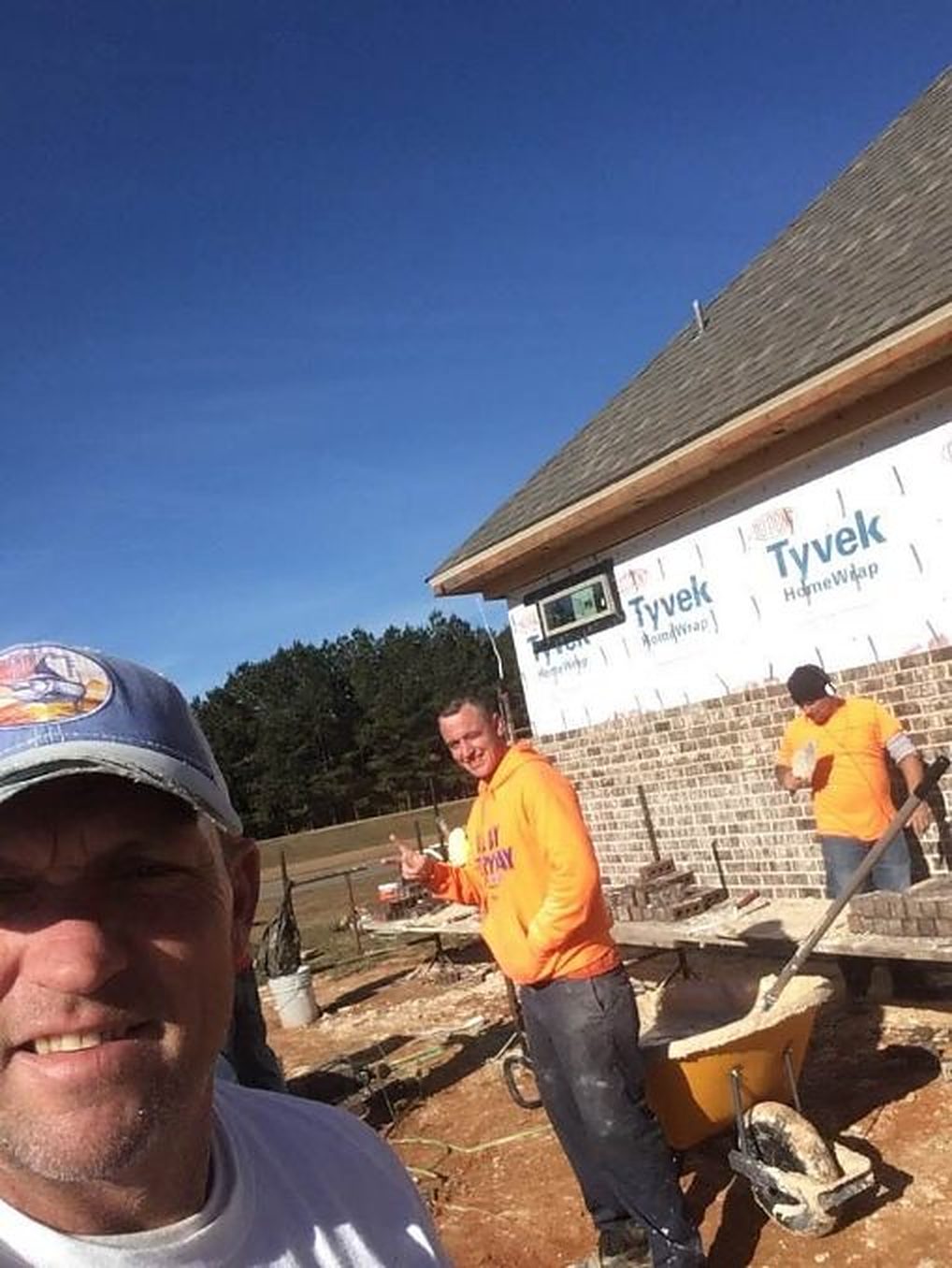
Brick is wet more often than people think
Mobile is one of the rainiest cities in the country, and it is hot and humid most of the year. Brick and mortar both soak up water a little like a clay pot does. That is normal. A brick wall was never meant to be watertight. It was meant to take some water, hold it a while, and let it dry back out.
The trouble here is the drying part. When the air is thick and the wall sits in shade under a live oak, a soaked wall can stay damp for days. Then the next rain comes before it ever dries. Brick that stays wet that long is where mildew grows, salts come out white, and mortar starts to go soft.
Rain that comes in sideways
A slow rain mostly runs down the face of a wall. A storm off the Gulf is a different thing. Wind driven rain gets pushed straight at the brick, and it finds every open joint, hairline crack and gap around a window. One side of the house usually takes most of it. That side tends to show wear first, with sandy joints, stains and loose brick, while the sheltered side still looks fine.
So when you look your house over, do not judge it by the front porch. Walk around to the side that faces the weather and start there.
How brick veneer on a slab is supposed to drain
Most houses built in Spring Hill and West Mobile in later years are brick veneer. The brick is a single layer standing a little out from a wood frame wall, sitting on a ledge at the edge of the slab. There is an air space between the brick and the wall. Water that gets through the brick runs down the back of it, hits flashing at the bottom, and drains out through small openings in the bottom row of brick. Those openings are weep holes.
Weep holes are the part people cover up without knowing it. Mulch piled high in the beds, soil built up against the wall, a new walk poured too high, paint, or a bead of caulk run along the bottom to keep bugs out. Any of those can trap water behind the brick. When it cannot get out, it sits against the bottom of the frame wall. You might not see anything outside until there is rot or a musty smell inside.
- Keep soil and mulch below the bottom row of weep holes
- Never caulk or mortar weep holes shut
- If bugs are the worry, there are weep vents made to fit the opening and still let water out
- Weep holes packed with dirt or mud dauber nests can be cleared gently with a thin piece of wire
Gutters, downspouts and splashback
A lot of wet brick has nothing to do with the brick. It is a gutter. A gutter full of oak leaves and pine straw overflows in the first heavy rain, and a sheet of water pours down the face of the wall in the same place every storm. That strip of brick stays soaked. Look for a dark band, green growth or white stains right under a run of gutter.
Downspouts do the same thing at ground level. One that empties right at the foundation dumps a roof's worth of water against the slab edge and the lowest rows of brick. An extension or a splash block moves that water out into the yard, and the soil should slope away from the wall so it keeps going.
Then there is splashback. Heavy rain hitting bare dirt or a concrete walk bounces up and throws water and mud onto the bottom few rows of brick. That bottom band is often the dirtiest and most worn part of the wall. Mulch or ground cover in place of bare dirt helps, as long as the beds stay below the weep holes.
Sprinklers and the air conditioner drain
Lawn sprinklers aimed wrong can wet a brick wall more than the rain does, and they do it every morning. Walk the yard while the system runs and turn any head that hits the house.
The same goes for the line that drains water off the air conditioner. In a Mobile summer that line runs a lot. If it drips on brick or onto the ground right at the foundation, move the end of it out into the yard.
Mildew and green growth on shaded walls
On the shaded side of a house, and anywhere under big oaks, brick grows a gray or green film. Sometimes moss settles into the joints. Most of it sits on the surface and does little to the brick by itself. But it holds water against the wall, and it tells you that side stays wet.
The fix most people reach for is a pressure washer. On brick, and old soft brick most of all, that can cut mortar out of the joints and blow the hard outer skin off the brick, which lets in more water than before. A soft brush, plain water and a cleaner made for masonry, tried on a small spot first, is gentler. Trimming limbs back so sun and air reach that wall helps it dry out between rains.
Signs water is getting through
Some signs are on the outside of the house. Walk the walls and look for these:
- Mortar that turns to sand when you scratch it with a key
- Gaps where mortar has fallen out from between brick
- Cracks that run through brick or step up along the joints
- White powder or crust on the face of the brick
- Brick faces flaking or popping off
- Caulk around windows and doors that has cracked or pulled away
And the signs inside
Inside, look at the walls that face out. Stains at the bottom of drywall, baseboards that swell or come loose, paint that bubbles under a window, and a musty smell in one room after a storm all point to water coming in on that side.
Gaps in the caulk around a window are a common leak that gets blamed on the brick. A window or door leak is often a sealant job, not masonry work. When Donald looks at a wet wall, he looks for what is letting the water in and tells you what he finds.
What to fix first
Water first, brick second. There is little sense in repointing a wall that a gutter keeps soaking. A rough order that works on most houses around Mobile:
- Clean the gutters and fix the ones that overflow
- Extend downspouts and slope the soil away from the house
- Pull mulch and dirt down below the weep holes and open any that are blocked
- Turn sprinkler heads off the wall and move the air conditioner drain
- Repoint open and sandy joints, starting on the side that takes the weather
- Replace cracked and spalled brick, and fix the chimney crown if it is cracked
Hold off on clear sealers
A clear coat on the brick sounds like the easy answer to all of this. Some sealers do keep rain off the face, but some also trap water and salts inside the brick, and the face starts to flake. Get the gutters, joints and cracks right first, and talk it over with a mason before anything goes on the wall.
When it is time to call Donald
Once the gutters and the ground are sorted out, the joints and the brick are Donald's side of it. Brick Repair and Renovations repoints worn mortar and replaces cracked and spalled brick in Mobile. The tuckpointing page explains how the joint work is done, and the brick repair page covers replacing brick.
Text Donald at (251) 305-5966 with a wide photo of the wall, a close one of the worst spot, and what part of town you are in.
Questions.
Should I seal my brick to keep the rain out?
Not as a first step. Some clear sealers trap water and salts inside the brick, and the face can start to flake. Fix the gutters, joints and cracks first. If a sealer still seems needed, pick one made to let brick breathe, and ask a mason before it goes on.
What are the small gaps along the bottom of my brick?
Those are weep holes. On brick veneer they let water that gets behind the brick drain back out. Keep them open, and keep mulch and soil below them.
Is the green growth on my brick hurting it?
Mostly it sits on the surface, but it keeps the wall damp. Clean it gently with a soft brush and a masonry cleaner, never a pressure washer on soft brick, and let more sun and air reach that wall.
Why is only one side of my house wearing out?
That is usually the side that takes wind driven rain, or the side with a bad gutter or a sprinkler hitting it. Brick and mortar wear where the water lands most.
Keep reading.
Tuckpointing
Tuckpointing and repointing in Mobile, Alabama. Worn, sandy mortar joints cut out and packed with new mortar matched to the old.
Brick repair
Spalled, cracked, loose and missing brick repaired in Mobile, Alabama by Donald W Carpenter, matched as close as he can.
White stains on brick
White powder on brick is efflorescence, salt left as water dries out. Why it shows up so much in Mobile, how to clean it gently and when it means a leak.
Pressure washing brick
Before you pressure wash brick in Mobile: what high pressure does to mortar and soft old brick, gentler ways to clean mildew, and why to test a small spot.
West Mobile and Spring Hill
Brick veneer cracks, weep holes, brick ledges and mildew in West Mobile and Spring Hill.
Send the details and Donald will call.
Tell Donald what you are seeing at the house and he will get back to you to set up a look.
Show Donald where the water is getting in.
Text a photo of the wall and the worst spot, and say what part of Mobile you are in.