Worn mortar joints, and what repointing them involves
Repointing is the job of grinding the tired mortar from between the bricks and filling those joints with fresh mortar. Tuckpointing started as a fancier finish on top of that, but these days most people use both words for the same job. Joints are due when they crumble to sand under a key, sit back from the brick face, or have gaps you can see into.
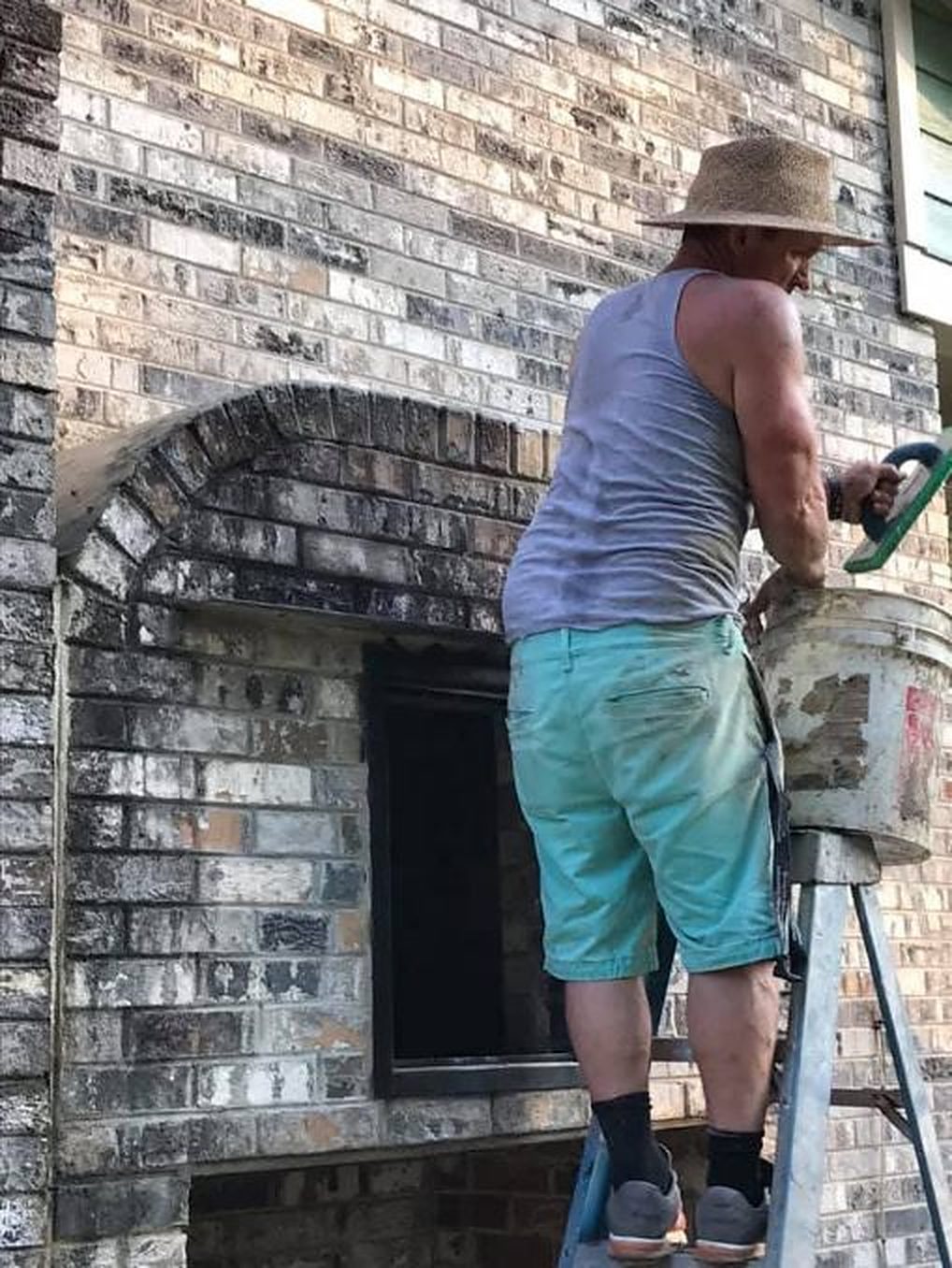
Where the word tuckpointing comes from
Repointing is the plain trade word. A mason cuts the failed mortar out, cleans the joints, and fills them again so rain runs off the wall instead of soaking in. The brick stays put. Only the joints change.
Tuckpointing is an old English trick for dressing up plain brickwork. The mason flushed the joints with mortar tinted close to the brick color, so the joints nearly disappeared. Then he ran a narrow, raised strip of white lime putty along that tinted mortar, which made rough brick look as if it had been laid with very fine, straight joints. A few old buildings still have true tuckpointing, and doing it well takes a steady hand.
Today almost everybody, masons included, says tuckpointing when they mean repointing. And that is fine. If someone in Mobile asks for tuckpointing, they nearly always want the worn joints cut out and filled. This guide uses both words that way.
What Mobile weather does to mortar
In a sound wall the mortar gives way before the brick does. Moisture leaves the wall mostly through the joints, and every cycle of soaking and drying wears on them a little. So the joints are where the wear shows first, and they come due for work long before the brick does.
Mobile is hard on mortar. It is among the rainiest cities in the country, the air stays muggy for most of the calendar, and storms off the Gulf push rain sideways into walls. A joint that would last a long time somewhere dry spends a lot of its life damp here. The lime in older mortar slowly washes out, the sand loosens, and the joint slowly sinks in behind the brick around it.
Salt air near the bay adds to it. So does a gutter that runs over, a downspout that empties against the wall, or a sprinkler that wets the same stretch of brick every morning.
Checking your own joints
You do not need a ladder to start. Walk around the house and look closely at the joints at eye level and below. For the upper walls and the chimney, use binoculars or zoom in with a phone camera.
- Drag the tip of a house key along a joint. Good mortar resists and barely scratches. Tired mortar turns to sand and trickles out.
- Sight along the wall from one end. Joints that have sunk in enough to leave a shadow line give rain a little shelf to sit on.
- Look for cracks running along the joints, thin gaps between the mortar and the brick, and joints with pieces missing.
- Watch for grass, moss or small ferns growing out of the joints. Roots only take hold where the mortar is open.
- Check inside too. A damp spot on a wall behind the brick, a musty closet on an outside wall, or stains around a window can start at open joints.
Cut out, clean, pack and tool
Cutting out comes first. The old mortar is ground or chiseled out past the crumbly part, down to mortar that is still sound. Depth matters here. A shallow cut that only scrapes the surface leaves new mortar sitting on loose old mortar, and it tends to pop back out.
On old soft brick the cutting is often done by hand, or with a grinder used very carefully, because a blade that wanders chips the edges of the brick and widens the joints. Widened joints never look right again. On newer, harder brick a grinder is the normal tool, with hand work in the corners and tight spots.
Then the joints get cleaned. Dust and loose bits are brushed and blown out, and the wall is dampened so the dry brick does not pull the water out of the new mortar too fast. In Mobile's summer heat that step matters a lot.
Fresh mortar is pressed hard into each joint, a little at a time where the joint is deep, so no voids are left behind the surface. When it firms up enough to hold a thumbprint, the joint is tooled to its final shape and the extra is brushed off the brick. After that the fresh work is kept out of hard sun and heavy rain, and kept a little damp while it cures. A downpour on fresh joints can wash the face right out of them.
Mortar that suits the brick
Fresh mortar ought to give before the brick around it does. On the newer brick houses in West Mobile and Spring Hill, the brick is hard and a standard mortar is usually right. On the older brick downtown and in the historic districts, a lot of the brick is soft and was laid in lime mortar. Hard cement mortar packed against that brick does damage. The brick ends up taking the wear the joint was meant to take, and the faces start breaking off.
Color comes mostly from the sand, then from the binder and any pigment. Getting close usually means mixing a few small samples, letting them dry, and holding each one up to the old joints. New mortar always looks a little bright at first and settles down as it weathers. The shape of the joint matters as much as the color. A rounded joint next to old flat joints will stand out from the street.
For a house inside a local historic district, check with the City of Mobile before the joints change color or shape. The guide to old brick and soft mortar goes further into all of this.
Starting with the wall that takes the rain
A whole house does not always need repointing at once. Walls wear unevenly. The side that takes the most wind driven rain, a wall that stays damp in the shade of a big oak, the chimney, and the brick under a leaky gutter usually go first. A wall tucked under a porch roof may hold up well for years after that.
So a partial job often makes sense. Doing the worst wall now and the rest later keeps water out where it is getting in, and it spreads the work out. The catch is color. Fresh joints on one wall will not match the weathered joints next to them right away, so it helps to stop the work at a corner or a downspout instead of the middle of a wall.
But a partial job only makes sense when the rest of the joints are still sound. If the key test turns up sand on every side of the house, doing one wall just moves the problem around.
Shortcuts that cause trouble
Smearing a thin coat of mortar over the old joints without cutting them out is the most common one. It looks fine for a while, and then the thin layer cracks and lets go because it never bonded to anything solid. Running caulk along the joints is another. It holds water in the wall instead of letting it dry out.
Clear sealers sprayed over worn joints do much the same thing. They can keep the face of the brick from drying, and in a place this humid that tends to end in spalled brick and more white salts.
Pressure washing a wall before or after repointing can undo the work too. High pressure cuts into new and old mortar alike. The guide on pressure washing brick covers that.
When the joints need Donald
If the key test turns up sand, or you can see joints with gaps and missing pieces, that is the work Donald W Carpenter does under Brick Repair and Renovations. The tuckpointing page on this site explains how he handles it on Mobile houses, from the cutting out to matching the old mortar.
Text Donald one picture showing the full wall and another close on the joints that look worst, with a coin held against them for size, and tell him which part of Mobile the house is in. Call or text (251) 305-5966.
Questions.
Where did the word tuckpointing come from?
It began as a decorative finish in England, with joints tinted to match the brick and a thin white line of lime putty laid over them. Today most people use the word for plain repointing.
What does worn mortar look like?
It sits sunk in from the brick, crumbles to sand under a key, and pulls away from the brick in thin gaps. Moss or little ferns rooted in the joints are another giveaway.
Which wall usually needs repointing first?
The one that takes the most wind driven rain, stays shaded and damp, or sits under a gutter that runs over. Chimneys often go before any wall. Sheltered walls can wait if their joints are still hard.
Why did my patched mortar fall out?
Usually the old mortar was not cut out deep enough, so the patch sat on loose material. Mortar that dried too fast in the heat, or mortar too hard for the brick, can also let go.
Will new mortar match the color of my old joints?
It can get close. Color comes mostly from the sand, so a match takes test batches. Fresh mortar looks bright at first and tones down as it weathers, and Donald looks for a mix that suits the brick too.
Keep reading.
Tuckpointing
Tuckpointing and repointing in Mobile, Alabama. Worn, sandy mortar joints cut out and packed with new mortar matched to the old.
Brick repair
Spalled, cracked, loose and missing brick repaired in Mobile, Alabama by Donald W Carpenter, matched as close as he can.
Old brick and soft mortar
Why old soft brick in Mobile's historic neighborhoods needs mortar softer than the brick, what hard cement mortar does to it, and how matching is done.
Pressure washing brick
Before you pressure wash brick in Mobile: what high pressure does to mortar and soft old brick, gentler ways to clean mildew, and why to test a small spot.
What goes into the price
What changes the price of brick and masonry work in Mobile: size, damage, height and access, matching old brick and mortar, and chimneys versus walls.
Send the details and Donald will call.
Tell Donald what you are seeing at the house and he will get back to you to set up a look.
Let Donald see your mortar up close.
One picture of the wall, one up close on the worst joints, and the part of Mobile you are in.