Checking brick and chimneys after a hurricane
After a hurricane or tropical storm, check the chimney and any brick overhead first, from the ground, and stay clear of anything loose. Photograph every side of the house before cleanup. A leaning chimney, brick pulling away from the wall and holes that let rain in cannot wait. Hairline cracks, stains and white powder can go on a list for later.
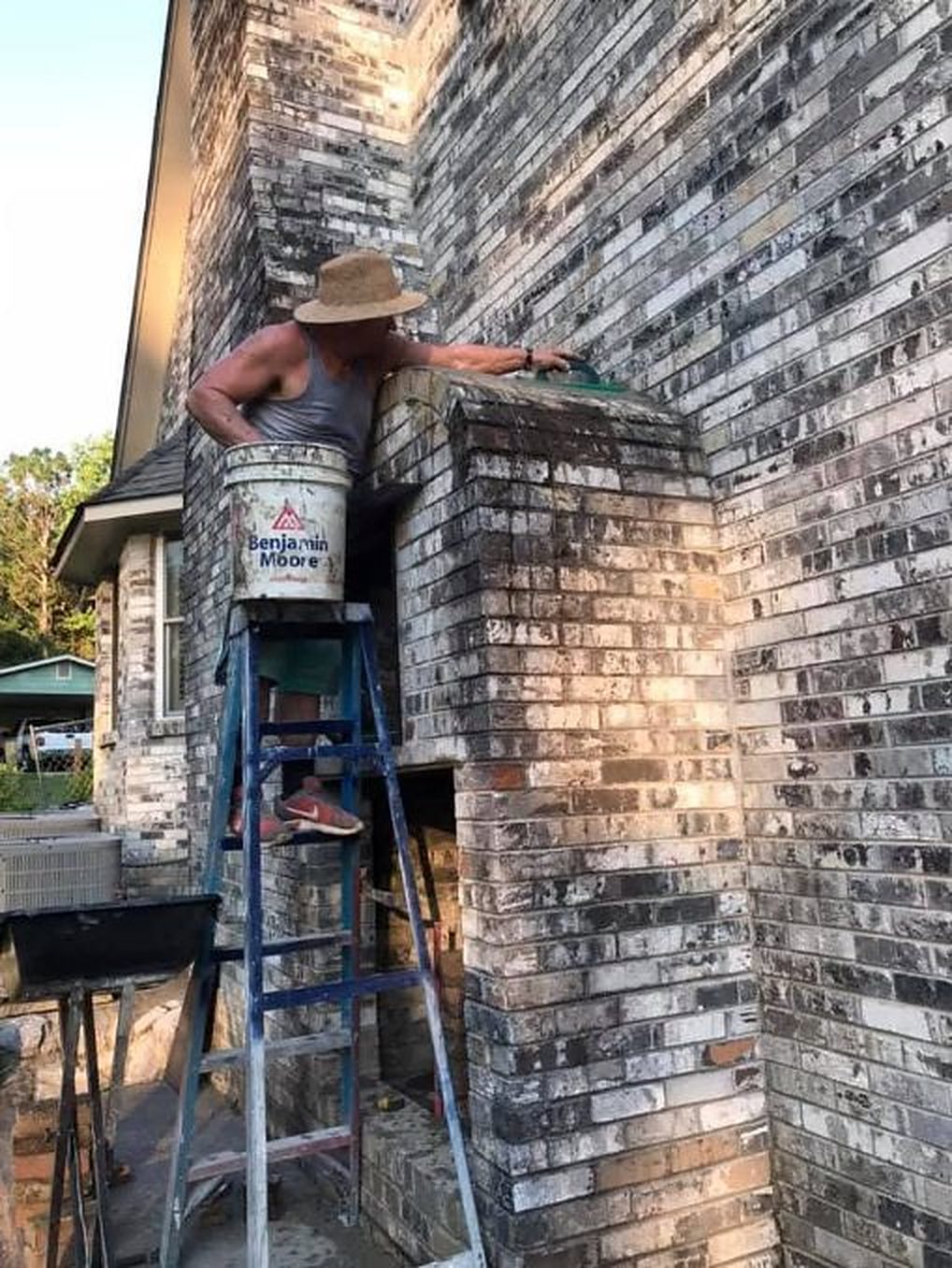
Safety before anything else
Hurricane season on the Gulf Coast runs through summer and fall, and Mobile has been through its share of storms. When one passes, the brick can wait a few hours. Downed power lines cannot. Stay away from any line on the ground or hung up in a tree, and treat it as live.
Look at the chimney from the yard, not from the roof. A wet roof after a storm is slick, and a chimney that took a hit may have loose brick near the top. Do not stand under it or park under it, and keep kids and pets away from that side of the house until someone has looked. And do not light a fire in the fireplace until the chimney has been checked inside and out.
What wind does to a chimney
The part of a chimney above the roof catches wind from every direction, and nothing holds it up but its own weight and the mortar. In a strong storm the cap can blow off, the top rows of brick can work loose, and a crown that was already cracked can break apart. A sound chimney tends to ride a storm out. One with soft joints and a cracked crown is the one that loses brick.
From the ground, look for brick missing at the top, a cap that is gone or bent, a lean, a gap opening where the chimney meets the house, and new cracks running across it. Binoculars help. Flashing torn loose where the chimney meets the roof is the roofer's side of the job, but it lets water into the same spot, so put it in the same photos.
Driven rain and walls that stay wet
Hurricane rain does not fall so much as it gets thrown. Hours of it pushed hard at one side of the house will find any open joint, crack or bad caulk line, and a lot of water gets behind brick veneer at once. If the weep holes at the bottom are blocked, that water has nowhere to go.
Walls soaked by a big storm stay wet a long time in Mobile's damp air. Some trouble only shows up weeks later: white powder coming out on the face as the wall dries, stains inside on the walls that took the rain, a musty smell in a closet. Keep an eye on the house for a few weeks after the storm.
Fallen limbs and trees
Big live oak limbs and pines come down in these storms, and some land on brick. A limb can knock out a corner, crack a run of brick or break a chimney crown. Those cracks are usually easy to see and easy to trace back to the hit.
A whole tree going over near the house is a different matter. When a big tree tips, the root ball lifts the ground with it, and that ground may be right beside a foundation or a walk. Look for new cracks in the brick near where the tree stood, doors that suddenly stick, and gaps opening at the slab edge. Movement like that is a job for a structural engineer or a foundation company to look at first. The masonry gets repaired after.
Floodwater and salt
Low parts of Mobile near the bay and the rivers can flood in a storm, and storm surge brings salt water with it. Masonry handles being wet better than wood does. But moving water can wash soil out from under the edge of a slab or from around foundation walls, and it leaves mud packed in weep holes and joints.
Salt water brings its own trouble. The salt soaks into brick and mortar, and as the wall dries over the following months it comes back out. Some shows up as white crust. Some dries just under the face of the brick and pushes the face off. Once the water is down, hosing the mud and salt off the outside at garden hose pressure with a soft brush helps. Leave the pressure washer in the shed.
If the house sits up on brick piers, as a lot of older Mobile houses do, look at those too. Soil washed out at the base of a pier, or a pier that now leans, needs attention. Pier work is something to ask Donald about directly.
Brick veneer that has pulled away
Brick veneer is held to the frame wall behind it with small metal ties. Near salt air those ties can rust over the years, and a storm pushing and pulling on the wall is often what finds the weak ones. A section of veneer that bulges, leans out, or shows a gap opening along its top or side can fall. Keep people away from it and have it looked at before anything else on the list.
Photos to take before cleanup
If you plan to file with your insurance company, they will want to see what the storm did before it was cleaned up. Call them and ask what they need, since policies differ. In general terms, these photos are worth taking:
- Every side of the house from far enough back to see the whole wall
- The chimney from the ground, from each side you can reach
- Close shots of each crack, missing brick or broken corner, with something in the frame for scale
- Limbs and trees where they landed, before they are cut up and hauled off
- Water lines on the brick and foundation if the house flooded
- Stains or leaks inside on the walls that took the storm
Keep the old brick
Keep the photos with their dates, and jot down what you saw and when. And any brick that came off the house in one piece is worth stacking somewhere dry. Old brick can be hard to match, and the brick that fell is the closest match there is.
What cannot wait
Some things need attention right away, mostly because they can fall or let in more rain before the next storm:
- A chimney that leans, has lost brick at the top, or has opened a gap at the house
- Brick veneer that bulges or has pulled away from the wall
- Holes where brick was knocked out and rain can get behind the wall
- A broken crown or missing cap that leaves the flue open to rain
- Cracks near a foundation where a tree went over or the ground washed out
What can go on the list for later
Other things can wait until the house has dried out and the bigger jobs are done. Hairline cracks that were there before, white powder, some loose mortar and stains on the face are worth fixing, but a few weeks will not change much. Repointing a wall that is still soaked from a flood is a poor idea anyway. Mortar work needs a wall that has had a chance to dry some.
Getting the brick put back
When the storm has passed and the lines are clear, send Donald the photos. Brick Repair and Renovations repairs brick and chimneys in Mobile, including loose and missing brick, cracked crowns and joints that let water in. The chimney repair page and the brick repair page explain that work.
Call or text (251) 305-5966 with the photos and your part of town. If something looks structural, Donald will say so plainly, since some jobs call for a structural engineer or a foundation company first.
Questions.
Is it safe to use my fireplace after a hurricane?
Not until the chimney has been checked. A storm can crack the crown, loosen brick at the top or knock debris down the flue. Have a mason look at the outside and a chimney sweep look at the flue before you light a fire.
Why does my brick wall leak only in big storms?
Driven rain pushes water into small joints and cracks that a normal rain never reaches. If a leak only shows up in big storms, check the joints, the chimney crown and the caulk around windows on that side first.
Should I pressure wash the mud off my brick after a flood?
No. Rinse with a garden hose and a soft brush. High pressure cuts mortar and can take the face off soft brick, and that face is what keeps water out.
Can the storm brick that fell off my house be reused?
Often it can, if it came off whole. Stack it somewhere dry. Donald looks for brick that matches yours, and the brick that came off the wall is usually the closest match there is.
Keep reading.
Chimney repair
Brick chimney repair in Mobile, Alabama: loose and spalled brick, open joints, cracked crowns and leaks.
Brick repair
Spalled, cracked, loose and missing brick repaired in Mobile, Alabama by Donald W Carpenter, matched as close as he can.
Foundation repair
Masonry foundation repair in Mobile, Alabama: cracked block, loose brick and washed out mortar in brick and block foundations.
Chimney leaks
Why brick chimneys leak in a place as wet as Mobile: the crown, cap, joints, brick and flashing, the signs inside the house, and which part is masonry.
Rain, humidity and brick
How Mobile's heavy rain and damp air get into brick walls through joints, weep holes, gutters and splashback, and which fixes to make first.
Send the details and Donald will call.
Tell Donald what you are seeing at the house and he will get back to you to set up a look.
Send Donald your storm photos.
Call or text (251) 305-5966 with a wide shot, a close one and your part of town.