Why brick faces pop off, and what fixes it
Brick spalls when water gets into it and something pushes the face off from inside. In Mobile that is usually salts drying under the surface, hard cement mortar on softer brick, pressure washing that broke the outer skin, or a sealer or paint that traps water. Find the water first, then replace the damaged brick and repoint with mortar softer than the brick.
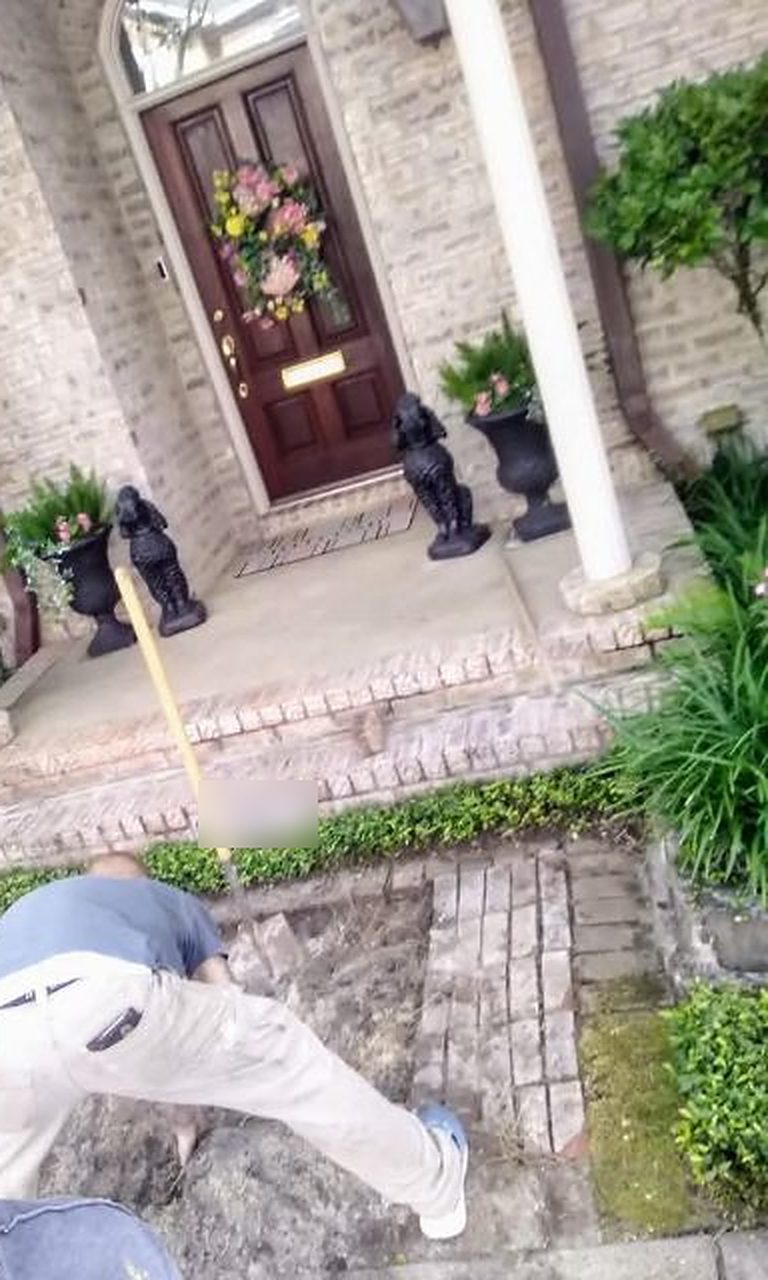
What spalling looks like
Spalling is when the face of a brick flakes, crumbles or pops off and leaves the rougher inside showing. Sometimes it is a thin skin peeling away. Sometimes a whole face comes off in one piece and lands in the flower bed. You may also see brick worn round and sandy at the edges while the mortar around it still looks hard.
The outer face of a brick is the toughest part. It came out of the kiln harder than the middle. Once it is gone, the softer inside soaks up water faster and wears away faster, so a spalled brick tends to keep getting worse.
Freezes are not the main cause here
In cold parts of the country, most spalling comes from water freezing inside the brick over and over every winter. Mobile gets a hard freeze only now and then, and it does not last. A rare freeze can still finish off brick that is soaked and already weak. But most spalling on Mobile houses comes from other things, and every one of them starts with water.
Salts drying under the face
Water moving through a wall carries dissolved salts. They come from the ground, from the mortar, from the brick itself and, near the bay, from salt air and storm water. When the wall dries, the water leaves through the face of the brick and the salt stays behind.
If the salt dries on the outside you see white powder, which is mostly harmless. If it dries just under the surface, the salt crystals grow in the tiny pores of the brick and push outward. Over time they lift the face right off. Walls that get wet and dry over and over are where this happens most, and that describes most walls in Mobile.
Hard mortar on soft brick
Mortar is supposed to be the weaker part of a wall. It should be softer than the brick and let water out more easily, so that when something has to give, it is the joint. Joints can be raked out and redone. Brick has to be cut out and replaced.
Trouble starts when softer brick, older brick most of all, gets patched or repointed with a hard modern mortar heavy in cement. The hard joint holds water in, so the wall dries through the brick instead, and the salts dry in the brick with it. The hard joint also does not give when the wall moves a little with heat and wet ground, so the brick edges take the strain. The result is brick crumbling around a joint that looks almost new. It is a common sight on older houses that were repointed with whatever mortar was on hand.
Pressure washers and harsh cleaning
A pressure washer is the fastest way to clean a mildewed wall and one of the fastest ways to ruin brick. The spray can cut into the fired skin of the brick and blast mortar out of the joints. The wall looks clean for a while. Then it soaks up more water than it used to, and the faces start to go.
Strong acid cleaners and sandblasting do the same kind of harm. Old soft brick in the historic districts is the most at risk. If a wall needs cleaning, a soft brush and a gentle cleaner made for masonry, tried on a small hidden spot first, is the safer way.
Sealers and paint that trap water
Some clear sealers and a lot of paints form a film on the brick. Water still gets into the wall through joints, cracks and the ground, but now it cannot dry out through the face. It collects behind the film along with its salts, and the face lets go, sometimes in sheets.
Not every water repellent works that way. Some are made to keep rain out and still let the brick breathe. But anything going on a brick wall is worth talking over first, because it is very hard to get back off.
Where it shows up first on a Mobile house
Spalling almost always starts where a wall stays wettest. On most houses around Mobile, check these spots:
- The bottom few rows of brick, kept damp by splashback, wet soil and sprinklers
- Under a gutter that overflows or a downspout that leaks
- The top of the chimney, which takes rain from every side and through a cracked crown
- Brick window sills and the brick right under them
- Below the spot where the air conditioner drain drips
- The shaded side of the house under big oaks
- Garden walls, planters and brick steps that get wet on more than one side
Reading the pattern
If the spalling sits in one of those spots, it points straight at the water. A band of flaking brick along the bottom says ground and splashback. A patch under one window says the sill. A ragged top on the chimney says the crown. Brick that spalls evenly across a whole wall, with hard gray joints, says the mortar or a coating is the problem.
How spalled brick gets fixed
Fixing spalled brick without fixing the water just means the new brick goes the same way. So the first job is the cause: the gutter, the downspout, the sprinkler, the cracked crown, the hard joints or the sealer.
Then the damaged brick comes out. The mortar around it is cut out with care so the brick next to it is not chipped, and a matching brick is set in with mortar suited to that wall. On older houses that means salvaged brick close in size, color and texture, and a softer mortar. On some old solid walls, a brick with a shallow spall can be taken out and turned around so its sound back face shows. Where a lot of joints are hard or open, repointing that area helps the wall dry the way it should.
Patching a spalled face with a skim of mortar or a cement coat is a common shortcut. It rarely stays on long, and it can hold water against the brick behind it.
Getting spalled brick looked at
Brick Repair and Renovations replaces spalled and cracked brick in Mobile, and Donald looks for what is letting the water in before setting new brick. The brick repair page covers how that work goes, and the tuckpointing page covers the joints.
Text Donald a photo of the wall and a close one of the worst brick at (251) 305-5966, along with your part of town.
Questions.
Can spalled brick be painted or patched over?
Paint and cement patches tend to make it worse. Paint can trap water behind it, and patches often fall off and take more of the face with them. Replacing the damaged brick and stopping the water lasts longer.
Will spalling spread to other bricks?
It can, if the cause is still there. Water, salts or hard mortar working on one brick are usually working on the ones around it too. Once the cause is fixed, sound brick usually stays sound.
Does a freeze cause spalling in Mobile?
It can play a part, but hard freezes here are rare and short. A freeze does the most harm to brick that is already soaked and weakened by salts or hard mortar.
Is spalling a sign of a foundation problem?
Usually not. Spalling is mostly about water and materials. Cracks that run through several rows, step cracks along the joints and brick pulling apart are the signs that point toward movement, and those deserve a closer look.
Keep reading.
Brick repair
Spalled, cracked, loose and missing brick repaired in Mobile, Alabama by Donald W Carpenter, matched as close as he can.
Pressure washing brick
Before you pressure wash brick in Mobile: what high pressure does to mortar and soft old brick, gentler ways to clean mildew, and why to test a small spot.
White stains on brick
White powder on brick is efflorescence, salt left as water dries out. Why it shows up so much in Mobile, how to clean it gently and when it means a leak.
Old brick and soft mortar
Why old soft brick in Mobile's historic neighborhoods needs mortar softer than the brick, what hard cement mortar does to it, and how matching is done.
Chimney repair
Brick chimney repair in Mobile, Alabama: loose and spalled brick, open joints, cracked crowns and leaks.
Send the details and Donald will call.
Tell Donald what you are seeing at the house and he will get back to you to set up a look.
Send Donald a photo of the flaking brick.
A wide shot of the wall and a close one of the worst brick is enough to start.